Mental Health Apps vs Real Therapy: Cost, Results & Hidden Differences (2026)
Mental health has become a major focus in 2026, with millions of people seeking help for stress, anxiety, depression, and other conditions. The rise of mental health apps has provided a convenient, low-cost alternative to traditional therapy, but it’s important to understand the differences in cost, results, and effectiveness between apps and real therapy sessions.
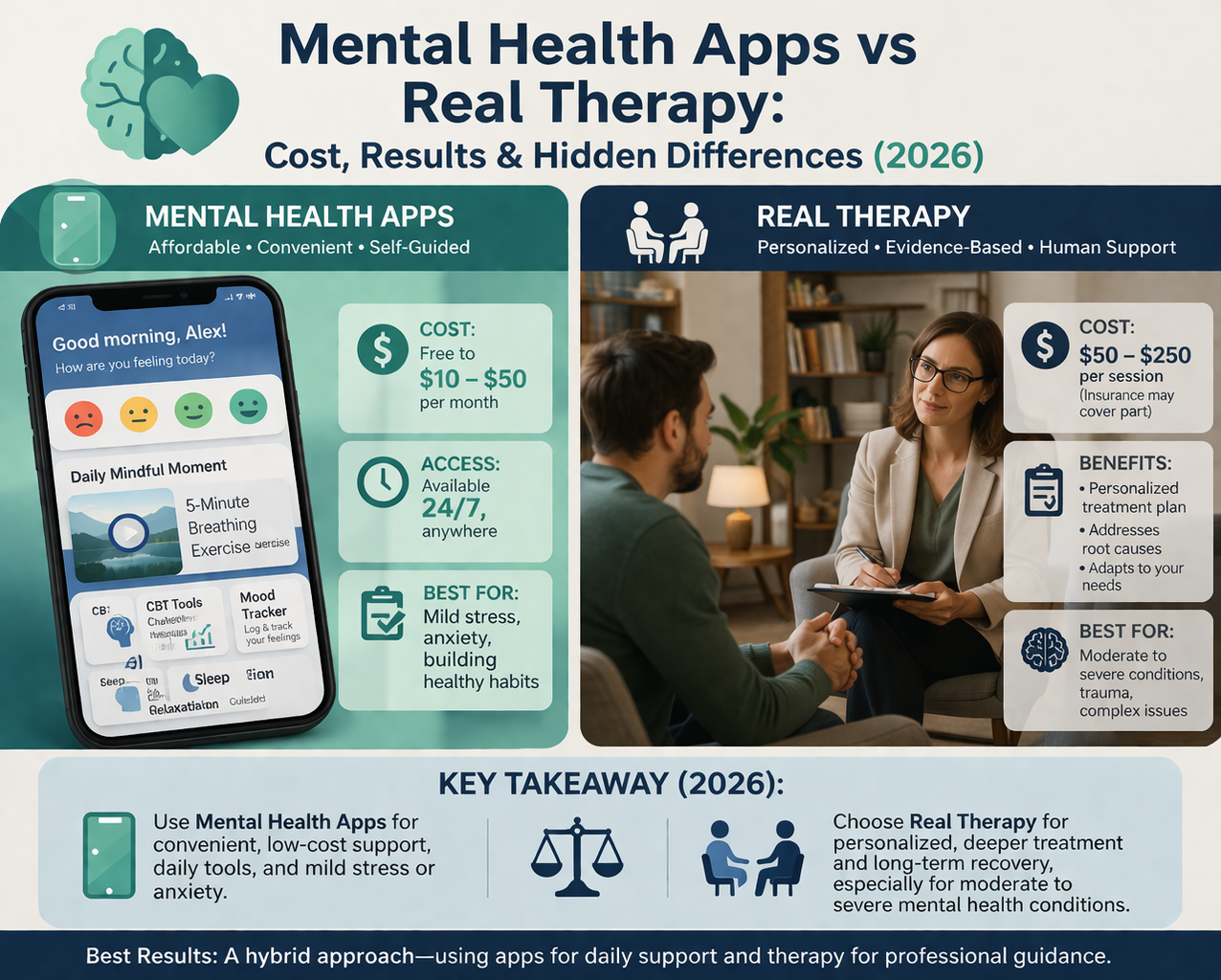
Mental health apps offer accessibility and affordability. Many apps provide self-guided programs for meditation, cognitive behavioral therapy (CBT), mood tracking, and stress management. Some apps are free, while premium subscriptions usually cost between $10 to $50 per month. Compared to traditional therapy, this is significantly cheaper.
Real therapy, such as sessions with psychologists, psychiatrists, or licensed counselors, is more expensive. In 2026, therapy sessions in private clinics typically range from $50 to $250 per session, depending on the therapist’s experience, location, and specialty. Insurance may cover part of the cost, but out-of-pocket expenses remain higher than app subscriptions.
Apps are convenient and available 24/7, which is ideal for people with busy schedules or those living in areas with limited access to mental health professionals. They can provide instant guidance, reminders, and exercises to manage mood and stress.
However, apps have limitations. They lack personalized interaction, and users may struggle with motivation or adherence. Apps cannot diagnose mental health disorders or manage complex conditions such as severe depression, PTSD, or bipolar disorder.
Real therapy provides personalized treatment plans tailored to individual needs. Therapists use evidence-based techniques, observe non-verbal cues, and can adjust treatment strategies based on ongoing assessment. This human element often leads to more effective long-term results.
Cost is a major difference. While apps may offer low monthly fees, therapy costs add up over time, especially for long-term treatment. However, the investment in real therapy often leads to deeper and more sustainable mental health improvements.
Effectiveness varies. Studies show that for mild anxiety or stress, apps can be quite effective, especially when combined with healthy lifestyle habits. For moderate to severe mental health conditions, real therapy consistently outperforms apps in clinical outcomes.
Engagement is another key factor. Apps rely on self-discipline and consistent usage. Users who skip exercises or fail to log their moods regularly may see minimal benefit. Real therapy provides accountability, support, and structured sessions that ensure progress.
Hidden differences include the level of crisis support. Mental health apps may offer chatbots or limited crisis lines, but they cannot replace immediate human intervention in emergencies. Licensed therapists, on the other hand, can provide urgent support, referrals, and safety planning.
Confidentiality and data privacy are also considerations. Apps often store sensitive data digitally, and while many promise privacy, there’s always a risk of data breaches. Therapy sessions are protected by strict confidentiality laws, ensuring that personal information remains secure.
Some apps offer AI-based therapy or chatbots, which mimic conversation with a human therapist. While innovative, AI interactions cannot fully replace the empathy, understanding, and professional judgment of a licensed therapist.
Apps are often marketed as quick solutions. Many promise fast relief from anxiety or depression, but these claims are sometimes exaggerated. Therapy focuses on long-term growth, coping strategies, and emotional resilience.
Real therapy allows for flexible approaches. Therapists can combine different treatment modalities, such as CBT, mindfulness, psychodynamic therapy, or family counseling, based on what works best for the patient. Apps are limited to pre-programmed content.
Cost-effectiveness is subjective. For someone with mild symptoms, an app subscription may provide sufficient support at a fraction of the cost. For those with severe conditions, investing in therapy often reduces hospitalizations, medication dependency, and long-term complications.
Another hidden factor is accountability. Therapists provide weekly check-ins and personalized feedback. Apps cannot monitor adherence beyond basic logging features. Patients who struggle with self-discipline may benefit more from real therapy.
Hybrid approaches are emerging. Some platforms combine app-based exercises with periodic therapy sessions, offering a balance between affordability and professional guidance. This approach may optimize results while reducing costs.
Apps can help build coping habits such as journaling, breathing exercises, and mindfulness routines. These practices support mental wellness and can complement real therapy, but they are rarely sufficient alone for complex conditions.
Therapy can address underlying issues that apps cannot. This includes childhood trauma, relationship difficulties, or chronic mental health disorders. A trained professional can interpret complex emotional patterns and provide appropriate interventions.
Monitoring and progress tracking differ. Apps use automated tools and metrics like mood scores, while therapists assess progress using both quantitative and qualitative measures, including observation and in-depth discussion.
Insurance coverage often favors real therapy over apps. Many insurance plans provide partial reimbursement for licensed mental health providers but may not cover app subscriptions, making therapy more accessible for insured patients despite higher costs.
Cultural and language considerations matter. Apps may have limited language options or culturally insensitive content. Therapists can provide culturally appropriate, personalized care.
Motivation and support networks differ. Therapy often involves guidance on building support systems, while apps encourage self-reliance. Some patients may thrive on self-guided approaches, while others need human encouragement.
Medication management is another key difference. Therapists and psychiatrists can prescribe and monitor medications for conditions such as depression or anxiety, something apps cannot do.
Stigma reduction is another benefit of therapy. Talking to a professional helps normalize mental health care and encourages proactive management, which is harder to achieve through apps alone.
Accessibility continues to improve. Teletherapy and online therapy sessions are making professional care more affordable and convenient, narrowing the gap between app and therapist access.
In conclusion, mental health apps and real therapy serve different purposes in 2026. Apps provide affordable, convenient, and useful support for mild conditions or ongoing wellness, while real therapy offers personalized, evidence-based treatment for complex and severe mental health issues. Choosing the right approach depends on individual needs, symptom severity, financial considerations, and long-term mental health goals.